
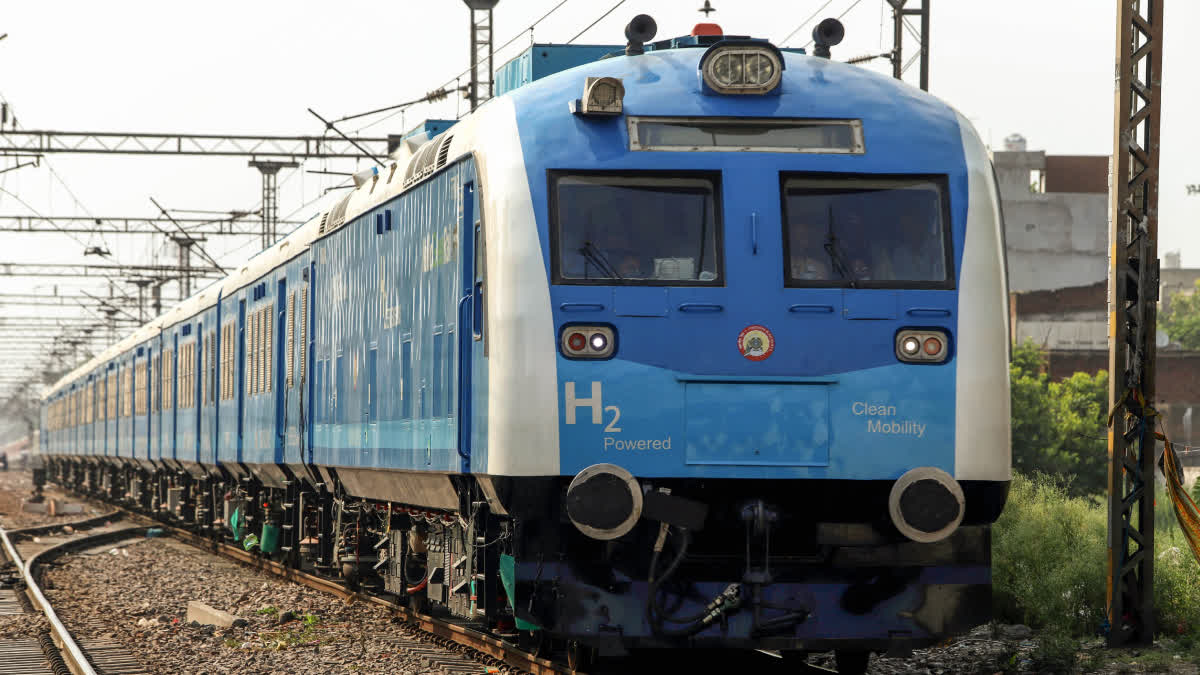
India has achieved a significant milestone in sustainable transportation by launching its first hydrogen-powered train. This landmark initiative marks a major step towards reducing carbon emissions and promoting environmentally friendly travel. With this achievement, India joins a select group of nations that have adopted hydrogen fuel technology in rail transport.
The hydrogen-powered train was flagged off by Prime Minister Narendra Modi during his visit to Haryana. The project reflects the Government of India’s commitment to clean energy, technological innovation, and modern railway infrastructure.
Unlike conventional diesel trains, a hydrogen-powered train uses hydrogen fuel cells to generate electricity. Inside the fuel cell, hydrogen combines with oxygen from the air to produce electricity, which powers the train’s motors. The only by-products of this process are water vapour and heat, making it a zero-emission mode of transportation.
Why Is This Important?
The introduction of hydrogen-powered trains offers several advantages:
- Environment-friendly: Produces no harmful greenhouse gas emissions during operation.
- Cleaner Air: Helps reduce air pollution by replacing diesel-powered engines.
- Energy Efficient: Hydrogen fuel cells convert energy efficiently while ensuring smooth train operations.
- Supports India’s Green Goals: Contributes to the country’s vision of achieving net-zero carbon emissions and expanding the use of renewable energy.
- Modern Railway System: Encourages the adoption of advanced technologies in public transportation.
Hydrogen Train Key Features
- Route: Jind-Sonipat (around 90 km)
- Distance on one refill: Around 250 km
- Hydrogen required for one round trip: Around 360 kg
- Coaches: 10 (Eight passenger coaches and two Driving Power Cars)
- Passenger capacity: Around 2,600
- Seats: 682
- Combined power output: Around 2,400 kW (approximately 3,200 horsepower)
- Fuel cells: Eight
- Onboard hydrogen storage: Around 440 kg
- Hydrogen production at Jind: Around 430 kg per day
- Hydrogen storage facility: Around 3,000 kg
- Operating speed: 75 kmph
- Top trial speed: 120 kmph
- Hydrogen purity: 99.999%
- Built at: Integral Coach Factory (ICF), Chennai
- Operations: Six days a week
Nice